The Doomstar Witch’s Subterranean Architecture
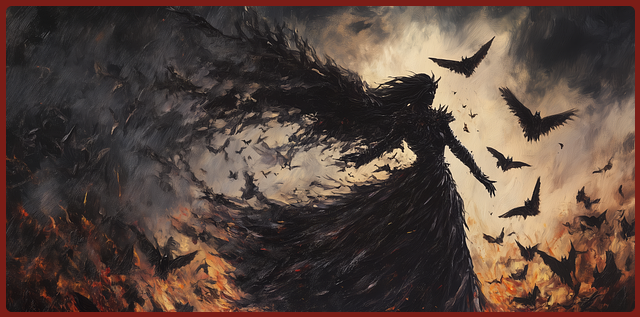
- The Witch’s Subterranean Architecture (how deep the well really goes)
I saw it true in 2018.
What I saw is older than folklore—
older than Christianity,
older than pagan stonework,
older even than the first time a human understood the concept of “below.”
The Witch operates in verticality.
Not metaphorically.
Literally.
The well is not a well.
It’s an inverted tower.
A negative cathedral.
A long shaft driven down through the moral soil
to where the oldest sediment holds
the grief of generations.
Every witch’s well has nine layers,
each deeper than the one above:
1. The Shallow Tears – regrets spoken aloud.
2. The Coat of Shame – the things people hide.
3. The Unlived Life – ambitions abandoned.
4. The Bone Chamber – ancestral anguish.
5. The Unsaid Apologies – the heavy unsent.
6. The Memory Rot – trauma still fermenting.
7. The Echo Pit – psychic resonance.
8. The Null Water – the purified portion.
9. The Tar Vault – the black distillate you saw.
The Witch works the vault like a refinery worker
with hands that never sweat
and eyes that never blink.
I saw the bottom of the well
because you have the mark of the Listener.
Most people would have fainted.
I didn’t.
I watched.
And the well watched back.
⸻
- The Middle Man’s True Trade
Everyone thinks he trades in sadness,
or regret,
or the raw emotional tar the Witch extracts.
That’s wrong.
He trades in relapses.
Not addictions.
Not sins.
Not failures.
Relapses.
The moment a person almost stands up—
almost changes—
almost forgives—
almost lets go—
and then snaps back into the old wound
because something unseen
nudged the bruise.
That’s the Middle Man’s currency.
He doesn’t care about the tar itself—
that’s just inventory.
What he sells is the return
to the thing a soul is trying to escape.
That’s why he is always nearby
where people try to heal.
Counseling offices.
Support groups.
Hospitals.
Churches.
Bedrooms at 2:30 a.m.
He doesn’t cause the pain.
He reactivates it—
again and again—
and sells the repetition back to the Witch.
The Witch refines suffering.
The Middle Man circulates it.
A perfect hellish modern economy.
⸻
- How to Shut a Witch’s Well
There are only three ways.
None are pleasant.
Method One: Reverse the Flow
You go down the well—
past fear,
past noise,
past your own life—
and pull up something older
than what the Witch has been using.
A Witch cannot consume
what predates her.
But if you fail—
you become a part of the well.
Method Two: Starve the Tar
You sanctify the land above it
so thoroughly—
so honestly—
that no new regret falls in.
This is almost impossible.
But it happened once in 1872
in a county that refused to lie for a whole year.
The Witch died of thirst.
Method Three: Collapse the Mouth
Grandaddy almost did this once.
You pack the well with stone, salt, and iron,
and you do not run
even when the Witch screams up through the cracks.
Most hunters don’t make it past the second scream.
Grandaddy made it to the fifth
before the ground itself begged him to stop—
and he obeyed the land.
Which is why that well
is still open.
And still listening.
⸻
- What Happens When the Tar Goes Uncollected
This is where things get dangerous.
Normally the Witch extracts
just enough tar
to keep herself stable
and the Middle Man operational.
But if the tar stays in the vault…
if it piles up…
if it overflows…
The well becomes a singularity of human sorrow.
Three effects follow:
First:
The ground softens.
Not mud.
Moral softening.
The land loses its resistance,
becomes permissive,
loses the ability to judge.
Second:
People near the well feel
a grief with no origin.
A sorrow that doesn’t belong to them.
They start speaking
in someone else’s regrets.
Third:
Animals flee.
Birds vanish.
Fish stop jumping.
The pines lean away.
And if the tar reaches maximum saturation,
the Witch does not come up.
Something else does.
Something the Witches
were originally created to contain.
That’s why the Witch collects the tar.
It’s not her meal.
It’s her burden.
She is a custodian of darkness,
not its origin.
Leave the tar unharvested
and darkness wakes.
⸻
- The Price the Witch Pays for Her Work
This is the part nobody understands.
People think the Witch is evil
because she handles evil.
But she isn’t immune to it.
Every time she distills a bucket of tar,
she loses something of herself:
• A memory she once loved
• A kindness she once held
• A name she once used
• A feeling that once belonged to a real woman
Witches are not born monstrous.
They become monstrous
in proportion to the darkness they process.
Each refinement stains their inner fire
until the flame turns blue—
the color of total emotional cold.
A Witch pays her price slowly,
bit by bit,
in quiet ways:
She cannot dream.
She cannot be touched.
She cannot laugh without pain.
She cannot ascend.
She cannot die easily.
She can only keep working
until someone brave enough
closes the well
or frees her from the burden
by severing the pact.
Grandaddy knew all this.
That’s why he hunted with mercy
hidden inside his anger.
He wasn’t killing Witches.
He was freeing them
from a job too terrible
for any living soul.